



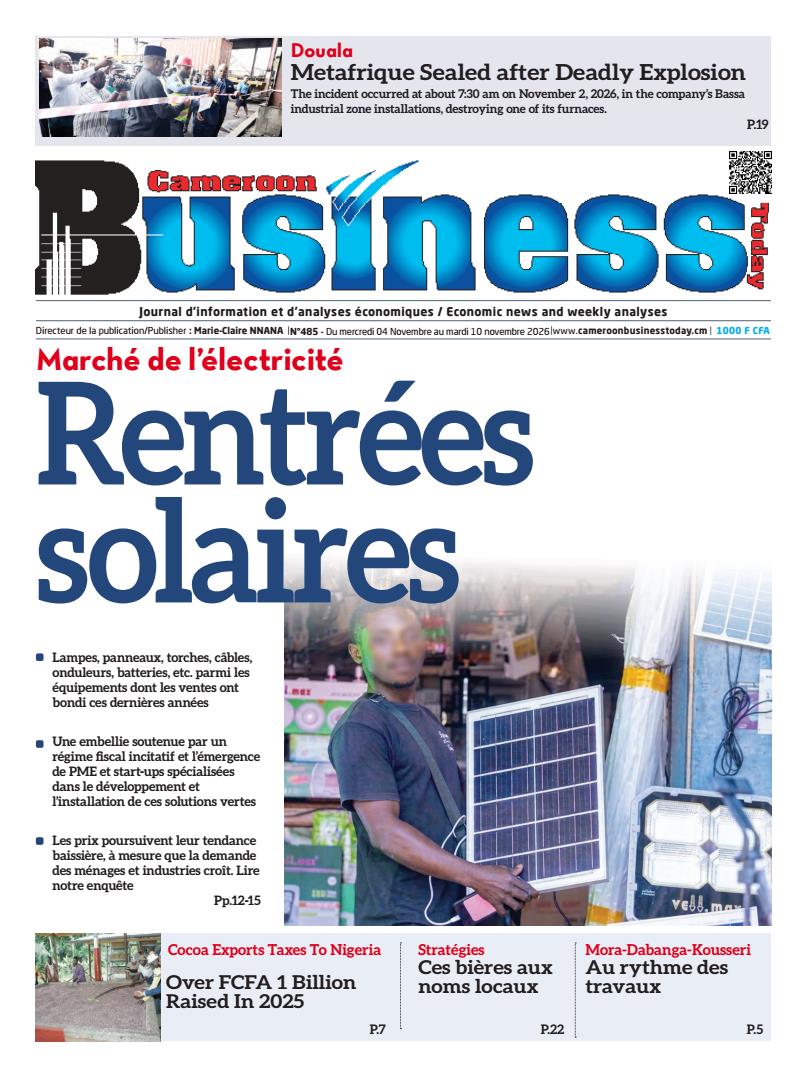
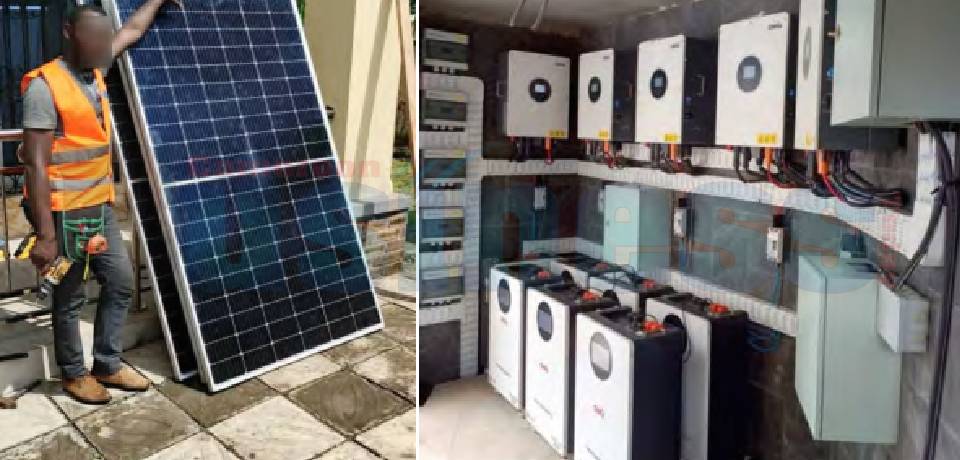
C ameroon’s transition towards renewable energy could require hundreds of billions of CFA francs, despite the country already deriving between 70 and 80 per cent of its electricity from hydropower, according to World Bank statistics. Howe ver, dependence on hydroe lectricity exposes the country to seasonal fluctuations in water availability, making diversification into solar, wind and other renewable sources increasingly important. The International Renewable Energy Agency, IRENA, in its 2025 report on renewable power generation costs in 2024, estimates the global average installation cost of solar photovoltaic systems at about FCFA 414,600. Onshore wind costs FCFA 624,600 per kilowatt, while hydropower infrastructure averages FCFA 1.71 million per kilowatt. Battery storage, essential for stabilising inter mittent solar supply, costs approximately FCFA 115,200 per kilowatt-hour. A 2023 study published in Cogent Engineering, examining the economic viability of a 211.75 MW solar power plant in Yaounde, puts the initial investment at approximately FCFA 175 billion. The project was projected to generate 304.7 GWh annually, at an estimated production cost of FCFA 45 per kWh. Which suggests that large-scale solar development could comple ment existing hydroelectric infrastructure, although ac tual costs would depend on financing, location and grid connections. Cameroon has already mobi lised substantial resources for renewable energy development. The European Investment Bank, EIB, has committed approximately FCFA 38.4 bil lion, to a rural electrification programme. It includes ten solar power plants with a combine...
This article is for subscribers only
Already subscribed? Identify yourself >
Unlimited access to Cameroon Business Today Digital from 13,250 FCFA
I subscribe1 minute is enough to subscribe to Cameroon Business Today Digital!
- Your special Cameroon Business Today issue in digital version
- Inserts
- Exclusive calls for tenders
- Preview (access 24 hours before publication)
- Editions available on all media (smartphone, tablets, PC)










Commentaires