



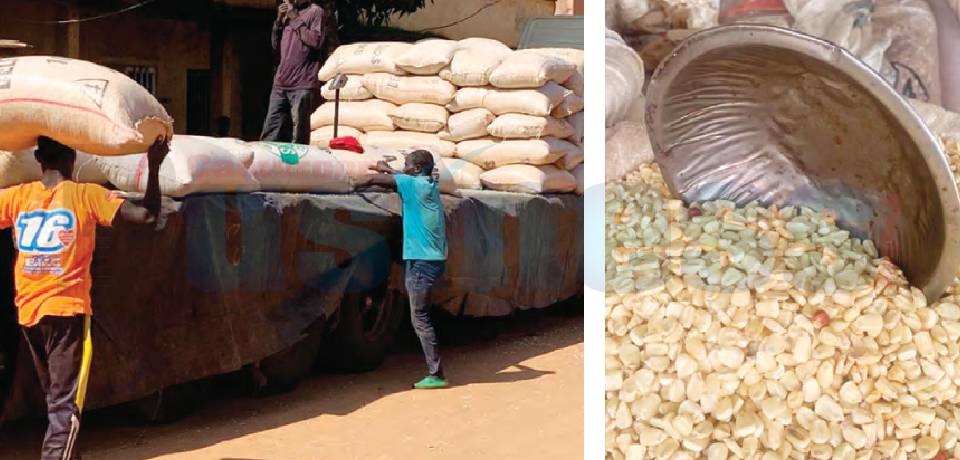
S tructural bottlenecks continue to choke the maize value chain. According to data published in May 2024 by the National Institute of Statistics, national maize production sits around 2.3 million-MT per year, yet national demand, driven sharply by livestock, feed mill, and brewing sec tors, exceeds 2.6 million-MT. This structural shortfall forces agribusinesses to rely heavily on foreign grain. The National Institute of Statistics reported in its May 2024 Foreign Trade Report that maize imports surged to 39,991-MT valued at FCFA 7.8 billion in 2023, re presenting a 229% spike from the previous year. Further more, in December 2025, the Ministry of the Economy’s Competitiveness Committee published its 2024 Compe titiveness Report, revealing that imports climbed even further to 81,833 metric tons, driving the national maize import bill up to FCFA 19.4 billion. The core challenges lie in distribution, modern in frastructure, and land access. Smallholder farmers, who make up over 80% of local producers, face post-harvest losses reaching 30% due to a lack of industrial drying and storage facilities. Transporting grain from agricultural hubs to industrial nodes remains a logistical nightmare that inflates market prices beyond those of imported alterna tives. “We want to source 100% of our grain locally, but local suppliers simply cannot guarantee the volume, quality, or price stability we need to...
This article is for subscribers only
Already subscribed? Identify yourself >
Unlimited access to Cameroon Business Today Digital from 13,250 FCFA
I subscribe1 minute is enough to subscribe to Cameroon Business Today Digital!

- Your special Cameroon Business Today issue in digital version
- Inserts
- Exclusive calls for tenders
- Preview (access 24 hours before publication)
- Editions available on all media (smartphone, tablets, PC)











Commentaires