




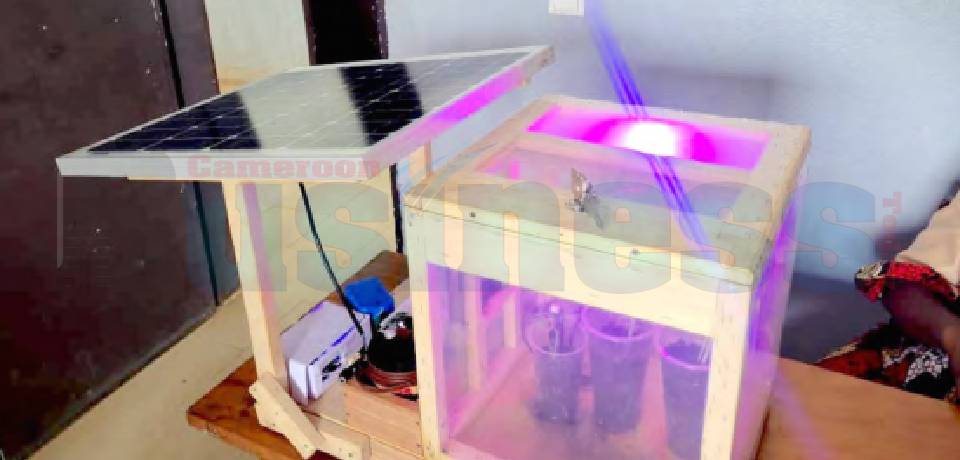
T he smart seed nursery system was developed by Ngelah Igma Tanyie, a final-year student in the Faculty of Engineering and Technology at the University of Buea, specialized in Electrical and Electronics Engineering. The innovation, provides plants with an enclosed, controlled environment where they can thrive. During her Bachelor of Engineering defense on July 10, 2026, she explained that when seeds are planted direc tly in the open field, they are exposed to harsh environmen tal conditions such as heavy rainfall, drought, and pests. Consequently, this exposure reduces their survival rate. Even when they survive, their crop yield is very low. She therefore created the smart seed nursery system to give seeds a safe and protected start, shielding them from harsh environmental conditions. Igma used sensors and actuators in constructing the system. The sensors collect environmental information such as soil moisture, air and soil temperature, humidity, and light intensity. Based on the information gathered from the sensors, the correspon ding actuators are activated. The actuators control these environmental parameters. The actuators used are the pump, the fan, and a custom-made grow light. This custom-made grow light uses a combination of red and blue LEDs. The grow light uses red and blue lights because they are most efficient for photosynthesis. Blue light promotes compact, leafy vegetative growth and strong root development, which are priorities at the seedling stage before transplantation. Red light drives stem elonga tion and leaf expansion and also supports flowering and fruiting later. The system focuses on the two colours plants use most effectively, so less energy is wasted, and the seedlings grow healthier and faster. Beyond automated control, the system also supports re mote monitoring via a mobile dashboard. This allows farmers check soil moisture, tempera ture, humidity, and light levels, along with actuator states, from their mobile phones in real time, without being phy sically present at the nursery. This is especially useful for far mers managing multiple plots or those who can’t check on their crops daily. The fan turns on based on the DHT22’s readings. The DHT22 monitors both humidity and air temperature. If either the humidity or the temperature is above the set threshold, the fan is activated. There are also soil temperature and soil moisture sensors that work together to prevent overwatering and root rot in cold soil. The soil temperature sensor measures soil temperature, while the soil moisture sensor measures soil moisture. Depending on the moisture and temperature of the soil, the pump is activated and deactivated. The irrigation system has two modes based on soil tempera ture. In cold mode (soil tempe rature below 18°C), the system maintains soil moisture at 65%, pu...
This article is for subscribers only
Already subscribed? Identify yourself >
Unlimited access to Cameroon Business Today Digital from 13,250 FCFA
I subscribe1 minute is enough to subscribe to Cameroon Business Today Digital!

- Your special Cameroon Business Today issue in digital version
- Inserts
- Exclusive calls for tenders
- Preview (access 24 hours before publication)
- Editions available on all media (smartphone, tablets, PC)











Commentaires