



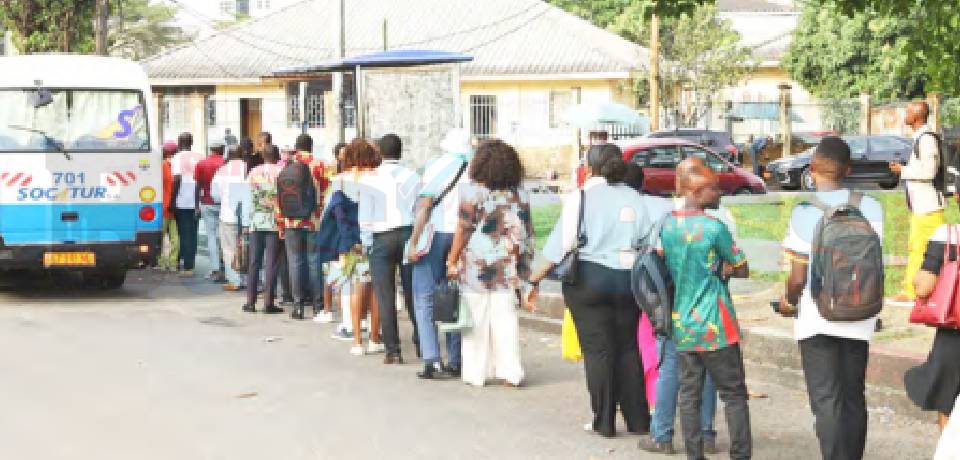
A s early as 6 am, the economic capital of Cameroon co mes alive with the deafening sounds of hooting taxis, motorcycles, and private vehicles. At major junctions and along busy streets, workers and schoolchildren scramble for transport, highlighting the growing challenges of urban mobility in a rapidly expanding city. For many residents, com muting to work, school, mar kets, and places of worship has become an expensive daily necessity. With limited public buses, inhabitants depend largely on taxis, moto-taxis, ride-hailing services, private cars, and clandestine taxis, commonly known as clandos. Although the official taxi fare stands at FCFA 350 per drop during the day and FCFA 400 at night from 10 pm, transporta tion costs remain a significant burden. Residents living two taxi drops away from their workplaces or schools can spend at least FCFA 2,500 daily, particularly when they must first take a motorcycle from their neighbourhood to the main road. Some wor kers spend between FCFA 1,500 and FCFA 3,000 daily on transport, while families with school-going children living far from school face even higher expenses. Some commuters have to trek long distances before catching a taxi to cut fares. Meanwhile, some private car and bike owners pick up passengers en route to work, using the cash to offset soaring fuel prices and vehicle servicing costs. Moto-taxis offer a faster al ternative during rush hours, weaving through congested traffic. However, their fares can exceed those of conven tional taxis, and their...
This article is for subscribers only
Already subscribed? Identify yourself >
Unlimited access to Cameroon Business Today Digital from 13,250 FCFA
I subscribe1 minute is enough to subscribe to Cameroon Business Today Digital!

- Your special Cameroon Business Today issue in digital version
- Inserts
- Exclusive calls for tenders
- Preview (access 24 hours before publication)
- Editions available on all media (smartphone, tablets, PC)











Commentaires