



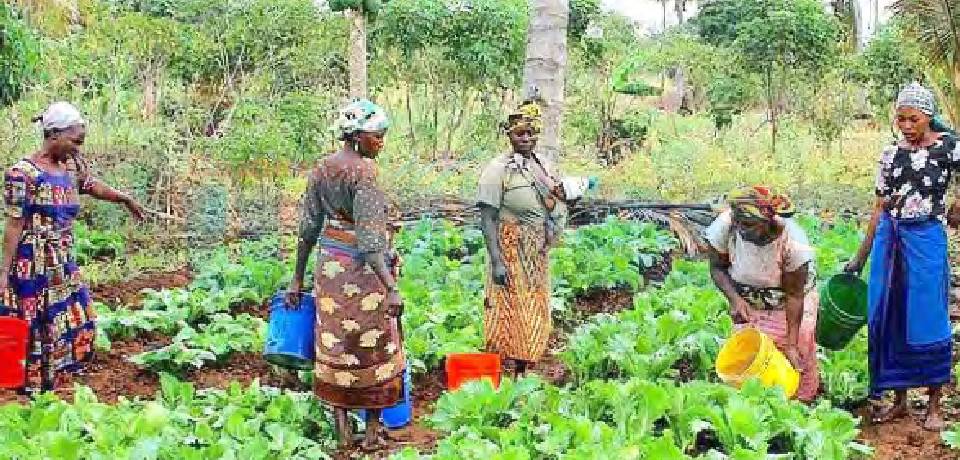
S tatistics from the Mi nistry of Agriculture and Rural Development and that of Women Empowerment and the Family (MINPROFF), confirm that rural women constitute over 70% of the agricultural workforce. Joint data from the Food and Agriculture Organisation and UN Women shows female far mers account for nearly 40% to 50% of agricultural labour across Africa and global agri food systems. These producers directly underwrite national food security by cultivating up to 85% of domestic food staples, mitigating trade de ficits, and stabilizing urban consumer prices. Furthermore, rural women form the core of value addition by processing primary yields into commercial goods like garri, specialized oils, and packaged spices, in troducing vital liquidity into local markets. The 31st international day of rural women observed this October 15 2026, coincides with the United Nations proclama tion designating 2026 as the international year of the female farmer. While global discussions led by UN Women emphasize environmental stewardship under the theme “Rural Women Caring for Mother Nature,” Cameroon’s national policy focuses “Investing in rural women: a lever for econo mic growth and sustainable development.” This signals a decisive departure from passive social assistance. This economic paradigm rests on five strategic levers including legal tenure for secured land access, modern equipment to replace manual labour, capa city building through techni cal and managerial training, tailored financing from banks and microfinances, and direct market access. Achieving this economic tran sition demands coordinated commitment from financial institutions, corporate off-ta kers, and civil society partners. Mic...
This article is for subscribers only
Already subscribed? Identify yourself >
Unlimited access to Cameroon Business Today Digital from 13,250 FCFA
I subscribe1 minute is enough to subscribe to Cameroon Business Today Digital!
- Your special Cameroon Business Today issue in digital version
- Inserts
- Exclusive calls for tenders
- Preview (access 24 hours before publication)
- Editions available on all media (smartphone, tablets, PC)












Commentaires