



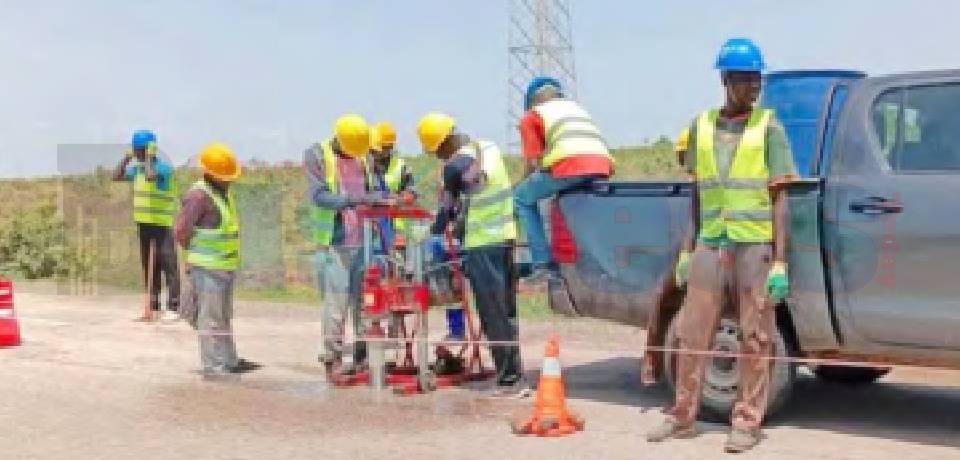
O n active job sites like the ongoing 52 km Babadjou-Bamenda highway corridor and its urban bypasses, or the just delivered bridge over the Nyong River, project execution proceeds through a structured, multi-actor framework. Before machinery moves, key contrac ting authorities notably the Ministry of Public Works, the Ministry of Housing and Urban Development, the Ministry of Water Resources and Energy, and local mayors representing Decentralized Local Authorities, define infrastructure priorities, secure budget allocations, and launch public tenders. They work alongside specialized enginee ring consultancies, architects, and urban planners to conduct preliminary studies, structural calculations, and alignment checks. Statutory professio nal bodies, then proceed to audit technical signatures and enforce ethics. These bodies include the National Order of Civil Engineers whose official rolls count over 4,500 registered civil engineers, the National order of Architects accounts for over 825 accredited architects, and the National Order of Urban Planners which registers 250 to 300 active urban planners. According to MINTP’s staffing standards, executing a BTP project requires a resident team of 15 to 30 key engineers, covering geotechnical, hydraulic, and quality leads supported by 50 to 100 topographers and technicians. During active construction, main building and public work contractors execute physical works under the continuous scrutiny of independent control missions. These technical au ditors run mandatory material stress tests certified by the Standards and Quality Agen cy (ANOR), enforce National Standards, and supervise mandatory Environmental and Social Management Plans to protect surrounding communi ties. International donors like the Afr...
This article is for subscribers only
Already subscribed? Identify yourself >
Unlimited access to Cameroon Business Today Digital from 13,250 FCFA
I subscribe1 minute is enough to subscribe to Cameroon Business Today Digital!

- Your special Cameroon Business Today issue in digital version
- Inserts
- Exclusive calls for tenders
- Preview (access 24 hours before publication)
- Editions available on all media (smartphone, tablets, PC)










Commentaires